Beautiful post I saw . Let’s make good water, lets make water good.

Beautiful post I saw . Let’s make good water, lets make water good.
I find myself getting intrigued, well at least showing more and more interest in news related to space—-as I grow older.
Things that happen in space, the moon’s waxing and waning, becoming full, eclipses, always I try to grasp a fuller understanding of the complexity of it all.
But always I fail.
Its beyond the human mind. And my little brain cannot work it out.
And I read about NASA, opening up its library of photo resources to the public today.
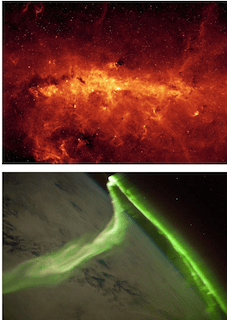
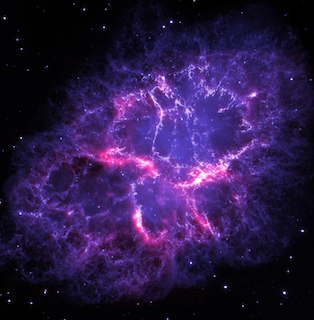
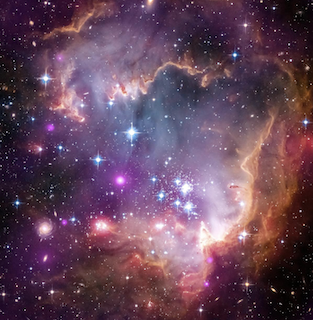
Wow. These are photos that make me wonder child-like again. Like cupping my face with my hands looking up there and go “wah, how can?”
What is happening up there?
I cannot imagine neither can I understand. Even if I read, even if I try to imagine and visualise as I read.
Just don’t get it
Magical things, unfathomable things beyond imagination and comprehension. I sort of like them though.
AND that they are happening whether or not we like it, can understand it.
Bigger than what we can imagine, but happening, The sheer scale of it, baffling—–but possible.
Why?
Simply because this is IT of life.
Life’s myriad of possibilities. I like the idea of possibilities.
That we can but also cannot make sense of it. These occurrences happening in space are the very things that shock us, surprise us, amaze us, push us to discover and learn and actually———they reduce us immediately.
Reduce our ego, our pride our sense of importance. Our theories, our mindsets, our beliefs our hypothesis. They shake up our systems and innerscapes so easily. And reduce our problems and unhappiness —–with their beauty and wonder.
There are like 140000 images, that you can search for here. https://images.nasa.gov
I try my hands and typed “sun”.
Found these images, that are quite different from the sun I see everyday out of the window.
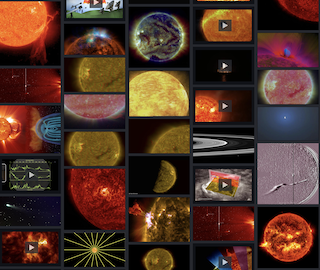
And this one called out to me—where’s the sun?
The sun can look like this too!
And what would be my possibility?
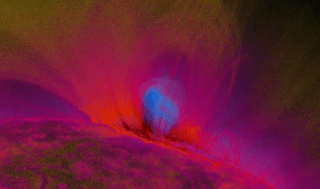
This is an image of magnetic loops on the sun, captured by NASA’s Solar Dynamics Observatory (SDO). It has been processed to highlight the edges of each loop to make the structure more clear. A series of loops such as this is known as a flux rope, and these lie at the heart of eruptions on the sun known as coronal mass ejections (CMEs.) This is the first time scientists were able to discern the timing of a flux rope’s formation. (SDO AIA 131 and 171 difference blended image of flux ropes during CME.) Credit: NASA/Goddard Space Flight Center/SDO —- On July 18, 2012, a fairly small explosion of light burst off the lower right limb of the sun. Such flares often come with an associated eruption of solar material, known as a coronal mass ejection or CME – but this one did not. Something interesting did happen, however. Magnetic field lines in this area of the sun’s atmosphere, the corona, began to twist and kink, generating the hottest solar material – a charged gas called plasma – to trace out the newly-formed slinky shape. The plasma glowed brightly in extreme ultraviolet images from the Atmospheric Imaging Assembly (AIA) aboard NASA’s Solar Dynamics Observatory (SDO) and scientists were able to watch for the first time the very formation of something they had long theorized was at the heart of many eruptive events on the sun: a flux rope. Eight hours later, on July 19, the same region flared again. This time the flux rope’s connection to the sun was severed, and the magnetic fields escaped into space, dragging billions of tons of solar material along for the ride — a classic CME. "Seeing this structure was amazing," says Angelos Vourlidas, a solar scientist at the Naval Research Laboratory in Washington, D.C. "It looks exactly like the cartoon sketches theorists have been drawing of flux ropes since the 1970s. It was a series of figure eights lined up to look like a giant slinky on the sun." <b>To read more about this new discovery go to: <a href=”http://1.usa.gov/14UHsTt” rel=”nofollow”>1.usa.gov/14UHsTt<
Had a great lunch with Stephan and we were speaking about spring vegetables —- that no matter how small they were they gave it their all they spring up year and again every springtime
And now I seeing this: this very special moonlight
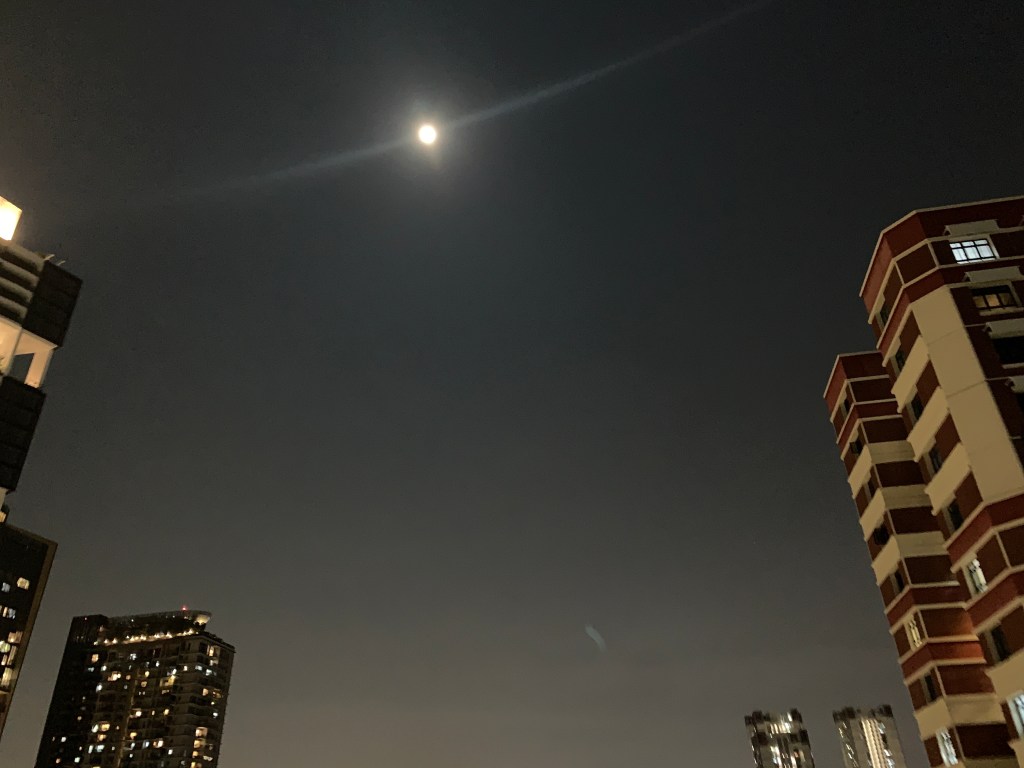
A lunar phenomenon will present itself this evening with March’s Super Worm Moon, the second closest pass of our natural satellite in 2020.
The start of the supermoon will reach its peak at 1:48 pm (EDT), lasting for several hours while it comes to its closest point to Earth, about 16,000 miles closer than its average orbiting distance.
This shortened distance between Earth and the moon will make our natural satellite appear to be 14 percent larger and 30 percent brighter, compared to its average size and luminosity on any given night.
But why is it called a “Worm moon?” According to folklore, the Worm moon was a moniker given to the last full moon before the spring equinox when the ground began to thaw and earthworms began to surface from the soil.
This super worm moon comes just ten days before the vernal equinox; another fascinating planetary phenomenon that occurs on the Mar. 19, during which time the planet’s tilt is completely balanced, allowing both halves of the Earth to experience an equal amount of daylight. And from then until the autumnal equinox, the Northern Hemisphere will begin to see longer days, while the Southern Hemisphere’s days grow shorter.
With this transition into spring marked by such a stunning display of cosmic phenomena, it may be a good time to dwell on the concepts of rebirth and starting anew. Jump at the opportunities that are presenting themselves to you – this abundance of worms emerging from the ground might be a sign that it’s time to evoke your inner early bird.
 Yellownblac's II Weblog